

Day of Sacrifice (Yawm al-Nahr): Rituals of Qurbani and Removing Ihram
Day of Sacrifice (Yawm al-Nahr): Rituals of Qurbani and Removing Ihram
Introduction
The 10th of Dhul-Hijjah, known as Yawm al-Nahr (Day of Sacrifice), is one of the most significant days in the Hajj pilgrimage. It marks the culmination of several sacred rituals including the stoning at Jamarat, the sacrifice (Qurbani), shaving or trimming the hair, and ultimately removing the state of Ihram. Below is a step-by-step guide to performing these rites according to Islamic teachings.
1. Rami at Jamarah al-‘Aqabah (Stoning the Great Pillar)
-
Begin by pelting the largest Jamarah (Jamarah al-‘Aqabah) with seven small pebbles, each about the size of a chickpea.
-
Say “Allahu Akbar” with every throw.
-
Avoid throwing large stones, shoes, or objects—this is not in line with the Sunnah.
-
Do not stop to make du‘a (supplication) at this Jamarah.
-
After the stoning is complete, stop reciting Talbiyah.
Note: Performing this Rami suffices in place of Eid prayer for pilgrims in Mina.
2. Qurbani (Sacrificial Slaughter)
-
After stoning, perform the sacrifice (Qurbani).
-
It is obligatory (wajib) for those performing Hajj Tamattu‘ and Hajj Qiran.
-
It is optional but virtuous for those performing Hajj Ifrad.
-
Up to seven pilgrims may share a camel or cow for sacrifice.
-
Outside of Hajj (on Eid), ten people can share one camel.
Sunnah Method of Sacrifice:
-
Lay the animal on its left side facing the Qiblah.
-
Place your right foot on its right side, and recite:
-
"Bismillah, Allahu Akbar"
-
"Allahumma innā hādhā minka wa laka" (O Allah, this is from You and for You.)
-
"Allahumma taqabbal minnī" (O Allah, accept this from me.)
-
-
For camels, perform nahr (piercing the lower neck) while the animal is standing with one leg tied.
Eating from the sacrifice is Sunnah and highly recommended.
3. Shaving or Trimming the Hair
-
After Qurbani, shave your head (halq) or trim the hair (taqsir).
-
Shaving is preferred for men, but trimming is permissible.
-
Women should gather their hair into a plait and cut about a fingertip’s length (approx. 1 inch).
-
Cutting nails and applying perfume is now permitted.
-
This act is known as First Tahallul, after which all Ihram prohibitions are lifted except marital relations.
For those using a sacrifice coupon, proceed to hair trimming once the sacrifice is confirmed.
4. Tawaf al-Ifadah (Tawaf of Hajj)
-
The most important ritual of Hajj, also called Tawaf al-Ziyarah, is performed on 10th Dhul-Hijjah, preferably after Rami and Qurbani.
-
It is permissible to delay it to the 11th, 12th, or 13th due to genuine reasons (e.g. illness or menstruation), without any penalty.
Key Points for Tawaf al-Ifadah:
-
No Ihram, Raml (brisk walking), or Iztibā’ (shoulder exposure) required.
-
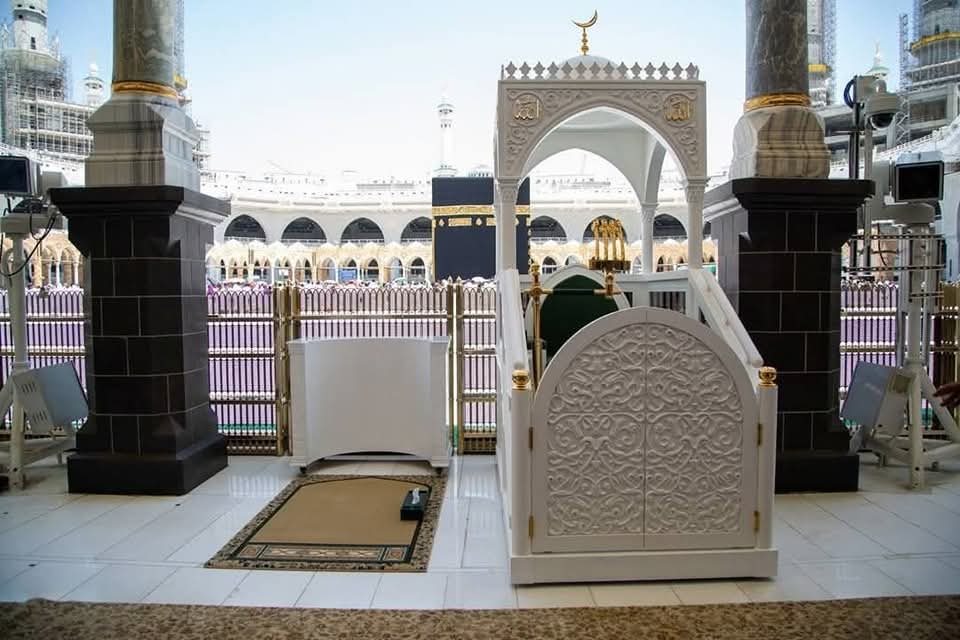
After Tawaf, pray two rak‘ahs at Maqam Ibrahim.
-
Hajj Tamattu‘ pilgrims must perform Sa’i (between Safa and Marwah) after this Tawaf.
-
For Qiran and Ifrad, if Sa’i was done with the earlier Tawaf (Qudum or ‘Umrah), it need not be repeated.
Final Stage: Second Tahallul
-
After Tawaf and Sa’i, all Ihram restrictions are lifted, including marital relations.
-
The pilgrim is now in a complete state of Tahallul.
Summary
| Ritual | Description |
|---|---|
| Rami | Stoning Jamarah al-‘Aqabah with 7 pebbles |
| Qurbani | Mandatory for Tamattu‘ and Qiran pilgrims |
| Shaving/Trimming | Ends major Ihram restrictions (First Tahallul) |
| Tawaf al-Ifadah | Obligatory act of Hajj, may be delayed if needed |
| Sa’i | Performed after Tawaf for Tamattu‘ pilgrims |
| Second Tahallul | All restrictions lifted, including marital |